nasdaq bitcoin blockchain

Your access to this service has been temporarily limited.Please try again in a few minutes.(HTTP response code 503) Reason: Manual block by administrator Important note for site admins: If you are the administrator of this website note that your access has been limited because you broke one of the Wordfence advanced blocking rules.The reason your access was limited is: "Manual block by administrator".If this is a false positive, meaning that your access to your own site has been limited incorrectly, then you will need to regain access to your site, go to the Wordfence "options" page, go to the section for Rate Limiting Rules and disable the rule that caused you to be blocked.For example, if you were blocked because it was detected that you are a fake Google crawler, then disable the rule that blocks fake google crawlers.Or if you were blocked because you were accessing your site too quickly, then increase the number of accesses allowed per minute.If you're still having trouble, then simply disable the Wordfence advanced blocking and you will still benefit from the other security features that Wordfence provides.
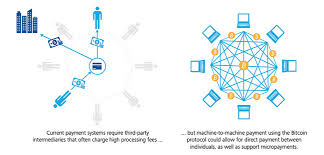
If you are a site administrator and have been accidentally locked out, please enter your email in the box below and click "Send".If the email address you enter belongs to a known site administrator or someone set to receive Wordfence alerts, we will send you an email to help you regain access.Generated by Wordfence at Sat, 24 Jun 2017 10:43:52 GMT.Your computer's time: document.write(new Date().toUTCString());. has become the first publicly traded company to issue stock over the internet, distributing more than 126,000 company shares via technology based on the bitcoin blockchain.Through a subsidiary called tØ, the Salt Lake City-based Overstock has spent the past two years building the technology that facilitates this new way of trading financial securities.The online retailer and its free-thinking CEO, Patrick Byrne, view the blockchain as a way of significantly streamlining not only stock exchanges like the NASDAQ, but all sorts of other capital markets.The blockchain is an online ledger controlled not by any one company or government agency, but by a global network of computers.

With bitcoin, this ledger tracks the exchange of money, but it can also track anything else that holds value, including stocks, bonds, and other financial securities.The idea is that this technology can more accurately and inexpensively oversee financial trades while eliminating many of the middlemen and loopholes that characterize today’s markets.Byrne calls today’s stock offering a “Sputnik moment.” In other words, it’s a first, but it’s largely symbolic.
ethereal void definition“It’s not a big Titan rocket.
bitcoin cuanto vale en dolaresIt’s not a moonshot,” he says.
bitcoin amsterdam september“But it demonstrates that we’re live.” He hopes to license tØ’s technology to outside organizations, including not just businesses like Overstock, but stock exchanges, banks, and other financial institutions.Ironically, for legal reasons, today’s offering required the participation of about as many middlemen as the blockchain is meant to replace.
ethereum file size
Even as it offered its internet-only stock, the company also distributed a new batch of shares for trading on the conventional over-the-counter market.And to satisfy regulators, the company drove the blockchain shares through a broker and various other middleman that typically accompany a stock offering—yet another sign that this young technology is still a long way from overhauling Wall Street.Today’s stock offering is a ‘Sputnik moment’: it’s a first, but it’s largely symbolic.That said, Wall Street has certainly taken notice of technologies designed to reinvent the capital markets via the blockchain.
trade bitcoin with mt4Last December, big-name banks JP Morgan, Wells Fargo, and State Street got behind an open source project called Hyperledger.
fastest litecoin mining rigMany others have joined a blockchain-focused consortium called R3.

The company behind the NASDAQ, meanwhile, has explored blockchain technology as a way of tracking the exchange of shares in private companies.But for now, it’s still unclear what technologies the big players will use or how they’ll use them.And the momentum isn’t all in the same direction: Goldman Sachs and three other big-name players recently pulled out of R3.The move towards the blockchain has slowed after an initial frenzy, which was driven largely by a fear of “disruption,” says Rick Stinchfield, head of technology at Finadium, the financial consulting firm that closely follows the progress of blockchain technology on Wall Street.The big banks, it seems, have realized this disruption isn’t happening anytime soon.“Things have slowed down, gotten more methodical,” he says.“Bankers and brokers are in the risk business, but one of the things they don’t like is technology risk.”Byrne first revealed Overstock’s new blockchain stock offering in October at a fintech conference in Las Vegas, and over the past month, any existing Overstock shareholder could subscribe to take part.

Today, the company actually moved the stock into investor accounts, including 126,565 shares traveling via tØ’s blockchain technology.Investors can begin trading the shares via the blockchain tomorrow.The Securities and Exchange Commission officially green-lit the operation last December, and Byrne says his company spent $5 to $6 million in legal fees securing regulatory approval from both the SEC and FINRA, the financial industry’s private overseer.tØ runs its own private blockchain, which would seem to defeat the purpose of the technology.The power of the blockchain lies in its distributed nature—as a technology that no one entity controls.But tØ publishes all transactions to the blockchain proper—the ledger that underpins bitcoin—which provides a very public record of anything that happens on its private system.Part of Byrne’s aim is to offer a transparency that today’s markets don’t provide.Byrne says Overstock and tØ are in discussions with multiple foreign governments about launching exchanges on the technology.
But Stinchfield and others warn that this sort of tech can’t keep up with the rapid-fire nature of the modern markets here in the US.“I can’t imagine the Nasdaq on a blockchain,” he says.“The technology is not up to snuff.And it’s unlikely regulators will get comfortable with this.”In the near term, such tech is more likely to reinvent relatively obscure pieces of the capital markets like the stock settlement system or the stock loan market.On Wall Street, it still takes up to three days to settle a stock trade—to actually move the shares between two parties.Blockchain tech can take this from three days down (T-3) to zero (T-0).Hence the name of Byrne’s company).Separately, the stock loan market is driven by a wide-range of well-paid middlemen that the blockchain could potentially eliminate from the equation.Ultimately, three main players drive today’s financial markets: the stock exchanges, the brokers, and the central security depositories that oversee settlement.Byrne believes that if any one of these embraces the blockchain, the other two will go extinct, significantly reducing the cost of trading securities.