mt gox and bitcoin
A View from Emerging Technology from the arXiv The Troubling Holes in MtGox's Account of How It Lost $600 Million in Bitcoins Computer scientists, who have been monitoring the Bitcoin network since January 2013, cast doubt on MtGox’s claim that its bitcoins were stolen by hackers.April 4, 2014 On February 10, a Bitcoin exchange called MtGox announced it had lost some 850,000 bitcoins, of which 750,000 belonged to its customers.At the time, bitcoins were trading at $827 apiece, making the value of the loss equivalent to $620 million.That’s a significant shortfall by anyone’s standards.But MtGox had an explanation.In a press release on that day, it announced it had been the victim of a fraud in which the bitcoins had been stolen by hackers.The fraud, said the company, was a result of a problem known as a transaction malleability bug.This allows malicious users to transfer bitcoins into their accounts while making MtGox think the transfer had failed.Consequently, MtGox repeated these transactions so that the total amount was transferred twice.Today, Christian Decker and Roger Wattenhofer at the Swiss Federal Institute of Technology in Zurich cast doubt on this version of events.
These guys have been monitoring bitcoin transactions since January 2013 in a way that allows them to detect malleability bug transactions.And they say that the total number of fraudulent transfers in that time is several orders of magnitude smaller than MtGox claims.Decker and Wattenhofer began monitoring the Bitcoin network in January 2013.
ethereum miner for windows 10They recorded all transactions, as well as those that were blocked, by connecting to around 1000 nodes in the Bitcoin network.
bitcoin zahlungsmethodeThat’s about 20 percent of the total.When a transaction is made, the details spread through the network telling other nodes who now owns the bitcoins.
ethereum coin exchange in indiaWhen the transaction fails, news of this also spreads so that everyone’s records can be updated.The malleability bug allows a malicious user to secretly change these details so that the original sender thinks the transaction has been blocked while everyone else thinks it has succeeded.
bitcoin cox
But Decker and Wattenhofer were able to record when this happened by looking for instances when the same transactions differed in the relevant details.During the year or so that they have been gathering their data, Decker and Wattenhofer have observed a total of 302,000 bitcoins involved in malleability attacks.
bitcoin account erstellenHowever, the vast majority of these occurred after MtGox’s February 10 press release, and appear to be copycat attacks triggered by the news that they could be successful.
bitcoin adoption in indiaThese, presumably, cannot have involved MtGox because it had prevented its customers from accessing their accounts by then.The numbers involving MtGox before then were far fewer.“Only 1,811 bitcoins were in attacks before MtGox stopped users from withdrawing bitcoins,” say Decker and Wattenhofer.What’s more, some 75 percent of these attacks were ineffective.

“As such, barely 386 bitcoins could have been stolen using malleability attacks from MtGox or from other businesses,” they conclude.This is three orders of magnitude less than the number MtGox claims.That’s an interesting study that leaves a gaping hole in MtGox’s account of what happened.“Even if all of these attacks were targeted against MtGox, MtGox needs to explain the whereabouts of 849,600 bitcoins,” say Decker and Wattenhofer.A curious corollary to this story is that a couple of weeks ago, MtGox announced that it had found 200,000 Bitcoins on an old hard drive.Those ones, at least, had not been stolen.The whereabouts of the rest is still unknownThis is a spectacular collapse.In 2013, MtGox was handling 70 percent of all bitcoin transactions.Today, it has suspended trading, closed its exchange and filed for bankruptcy protection.We emailed MtGox for comment but haven’t heard back./abs/1403.6676: Bitcoin Transaction Malleability and MtGox Tech Obsessive?Become an Insider to get the story behind the story — and before anyone else.
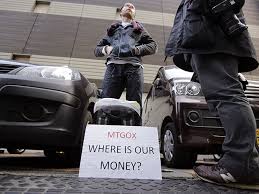
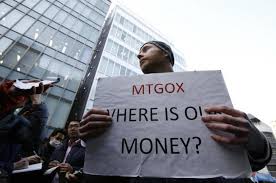
The collapse of Mt.Gox might appear sudden, but bitcoin insiders say its downfall began nearly a year ago as the virtual currency exchange tangled with regulators, split from former business partners and grappled with cyber attacks.Mt.Gox's fall lays bare the difficulties the bitcoin community faces as it tries to square its freewheeling, libertarian ideals with the rigorous regulation required in financial services and customers' needs for reliable service.Once the world's biggest bitcoin exchange, Mt.Gox on Friday filed for bankruptcy protection, saying it may have lost nearly half a billion dollars worth of the virtual coins due to hacking into its faulty computer system.How it managed to lose so much so quickly is still unclear.U.S.federal prosecutors have subpoenaed Tokyo-based Mt.Gox - and other bitcoin businesses - to seek information on a recent spate of disruptive cyber attacks that overwhelmed some exchanges and forced them to suspend withdrawals.Gox never recovered, whereas rivals such as Slovenia-based Bitstamp have since resumed operations."The

first wave of entrepreneurs were evangelists for the technology, but low on quality," said Nick Shalek, an investor at Ribbit Capital, which has backed bitcoin companies including digital-wallet Coinbase.Now, he said, a more serious group of entrepreneurs is trying to build more serious infrastructure around bitcoin.Bitcoin is a digital currency that, unlike conventional money, is bought and sold on a peer-to-peer network independent of central control.Its value has soared in the last year, and the total worth of bit coins minted is now about $7 billion.Mt.Gox's decline, ironically, started just as bitcoin was hitting a new level of notoriety in the broader public.Proponents include prominent Silicon Valley venture capitalists who talked up a virtual currency system free of government intervention or control.Founded in 2009 by American software hacker Jed McCaleb, Mt.Gox was originally a site for people to trade cards for a game called "Magic: The Gathering."Gox is short for "Magic: The Gathering Online Exchange")McCaleb turned the site into a bitcoin exchange and sold the fledgling business in 2011 to Mark Karpeles.

Under the Frenchman, Mt.Gox became the face of bitcoin - where investors regularly checked the price of the digital currency and where the largest volume of trades occurred.As regulators started to take notice of the bitcoin market, Karpeles became a vocal champion.Gox as "the main exchange" and argued for bitcoin's legitimacy while trying to distance it from criminals using the digital currency for money laundering or drug-related activities.Karpeles said Mt.Gox had no interest in helping criminals launder funds, and pushed back against claims that bitcoin transactions were completely anonymous, noting that while the system was designed for privacy, it was easy to track bitcoin across the network.If authorities found a way to shut down Mt.Gox, "the likely result will be more exchanges popping up all over, with methods much harder to track, and who will be much less likely to agree to help with any investigation," Karpeles said in a 2011 email to a reporter for the Compliance Complete service of Thomson Reuters Accelus."We

want (authorities) to understand that the problem is not bitcoin itself, but what some people do with those," he said in the message, one of numerous emailed exchanges over the years.In 2011, bitcoin was barely trading at $1, but volumes were picking up at Mt.Gox, which routinely saw more than 20,000 transactions daily, more than double those in late 2010.Gox had servers in the United States but little in the way of money.It used Iowa-based online payment processor Dwolla Inc to make U.S.customer transactions easier.Bitcoin's popularity increased incrementally, similar to its price.On April 1, 2013, it topped $100 for the first time, and trading volumes were increasing.Around this time, a regulatory push intensified.Treasury Department's Financial Crimes Enforcement Network (FinCEN) declared bitcoin exchanges to be money transmitters, requiring them to register, enact formal anti-money laundering programs, and report suspicious activity.Shortly after that, a bitcoin exchange known as bitfloor was shuttered after its U.S.
bank account was closed because it had not properly registered with regulators.Concerns that regulatory action would cause customer funds to be trapped resulted in a sharp plunge in bitcoin, falling from $230 on April 10 to a low of $68.49 on April 17 - a period of time that turned out to be the peak in terms of dollar-denominated trading on Mt.Gox, according to Bitcoincharts.As volumes jumped that month - on two separate days, there were more than 500,000 dollar-denominated transactions on Mt.Gox - the exchange said it was overwhelmed by the volumes, and it was working to upgrade its systems.Karpeles said in an April 13 email that bitfloor's closure was a fate that would not befall Mt."We apply very strict AML (anti-money laundering) procedures to avoid exactly this kind of issue.We have very good relationships with our banking partners and making sure everything is run as good as possible."On April 18, Karpeles clarified that Dwolla was the company's only transaction provider."We do not use any U.S.

bank," he said via email.Mt.Gox did not immediately register with FinCEN - a misstep that would in part lead to its demise.In May 2013, the U.S.Department of Homeland Security froze an account that Dwolla held at Veridian Credit Union in the name of Mutum Sigillum LLC, a Mt.Gox subsidiary incorporated in Delaware.A related court document said another account at Wells Fargo had been seized earlier that month.The Department of Homeland Security justified the seizures by accusing Mt.Gox of failing to register with Treasury as demanded by FinCEN.(It eventually registered in June.)Karpeles has declined to comment on the seizures, but this complicated the ability of Mt.Gox to allow U.S.customers to liquidate existing investments.Dwolla eventually ended its relationship with Mt.Gox, in a blow to the exchange."Mostprofessional users moved away from Mt.Gox months ago, leaving April 2013 or thereabouts.By June 2013, the final nail was in the coffin for U.S.users," said one of bitcoin's core developers, who requested anonymity.This in turn caused bitcoin's prices on Mt.

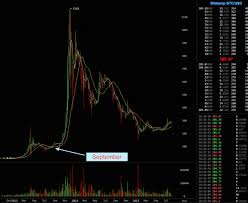
"What happened then is because you couldn't withdraw dollars, there became a major premium for bitcoin on Mt.Gox," said Jacob Dienelt, a maker of bitcoin paper wallets in New York.The rise in bitcoin's value gave it more cachet with the general public, even though most people were still uninformed about exactly what bitcoin was.Dollar trading volumes started to diminish on Mt.Gox then - from about 66,770 transactions daily in May to a little over 14,000 in September.Volumes surged for a few months, but dropped to about 9,000 daily by January, according to bitcoincharts.Those in the industry said Mt.Gox ceased to be the exchange of choice about nine months ago as competitors such as Bitstamp gained prominence.By the start of this year, Mt.Gox was considered a diminished player due to concerns about its technology and safety."Itwas obvious there was something really bad going on there for nearly a year.They were processing withdrawals very slowly and generally being very opaque about what was going on," said Mike Hearn, a bitcoin developer based in Switzerland.Mt.
Gox's problems earlier this month stemmed from "distributed denial of service" attacks, where hackers sent thousands of phantom transactions to the exchange to slow its operations.Other exchanges experienced this problem as well, but were able to restore service more quickly.The hackers exploited a process used by some bitcoin exchanges that introduced "malleability" into the code governing transactions, experts said.Simply put, this allowed hackers to slightly alter the details of codes to create thousands of copies of transactions.These copies slowed the exchanges to a crawl, forcing them to independently verify each transaction to determine what was real and what was fake."Itwas a well-known issue that every major exchange in the bitcoin community knew about and had solutions for.Gox did not," said Jordan Kelley, chief executive of Robocoin, the world's first bitcoin ATM maker.Mt.Gox said on Friday that it had lost 750,000 of its users' bitcoins and 100,000 of its own.At the current bitcoin price of about $565, that would total some $480 million - representing about 7 percent of the estimated global total of bitcoins."There