ethereum python

Mapping the blockchain education ecosystem When I created my first tutorials almost two years ago, there were very few educational resources about blockchains.The ecosystem was sorely lacking in good courses, tutorials and guides to ease the learning curve for newcomers.I remember the many days I’ve spent reading raw codes and technical documentation until I was finally able to manually connect to the Bitcoin network, create keys, sign transactions, etc.But two years is forever in the world of… Read More Mapping the blockchain education ecosystemWhen I created my first tutorials almost two years ago, there were very few educational resources about blockchains.I remember the many days I’ve spent reading raw codes and technical documentation until I was finally able to manually connect to the Bitcoin network, create keys, sign transactions, etc.But two years is forever in the world of blockchain, now… Read More The wild west of certificatesBlockchain education is a growing ecosystem with very few players.

Most courses and training programs are trying to create their certification program, tailored specifically to their self-construct program.This is a major issue for anyone involved in this field: the students, the course/program instructors and creators and future employers/customers.My experience in this ecosystem has let me consider few approaches regarding certification, especially my eight weeks live course which provided me with numerous insights and made me examine… Read More important notice, please read!This post blog is for educational purposes only.Solidity and Ethereum are bleeding edge technologies and should be treated with respect.Make sure to properly educate yourself before attempting to implement any code you might find online.I can attest that the code provided here is without a doubt not secure.It’s (at the very least) susceptible to overflow attacks, short address attacks and transferFrom double spend attacks.This is actually a very good example to… Read More Bitcore is an excellent JavaScript library that is in use in many Bitcoin-related websites.

Using the tools in this library one can easily achieve almost every Bitcoin functionality.Creating key pairs, parsing blocks, creating and signing transactions and more.
bitcoin goes bustIn this post, I’ll focus on the use of Bitcore when dealing with key pair.
bitcoin exchange disappearsThe zero A beginner web developer can create a simple key pair by just using: bitcore = require(“bitcore-lib”); privateKey = new bitcore.PrivateKey // Generate a… Read More Import: This article is for educational purposes only.
bitcoin atm typesDon’t attempt to incorporate the codes and methods presented here into working applications and don’t use keys that are associated with your real Bitcoin/Ethereum wallets.
bitcoin mine burns down
The key pair Key pair (Asymmetric encryption) is one of the building blocks of current blockchain solutions and cryptocurrencies, without it, Bitcoin, Ethereum and other blockchains were not possible.
bitcoin 2050The idea behind this tool is quite simple: Encrypting information using one key (public key) and decryption it using… Read More Why (and why mot) using JavaScript Many of my students wishes to create their own blockchain applications.
ethereum open source projectsMany of them came from app and web development background, and while they are still highly motivated to learn how the blockchain itself works, their main goal is not purely academic.
litecoin transactionThey want to see a product in action.
china bitcoin guardian
When catering for such students, it’s important to adjust the course material to their own background and goals.Mainly it means to provide them… Read More This article is part of a series of articles depicting my experience with creating and conducting an 8 week long blockchain app development course in Brazil.
bitcointalk altcoinWhat tools should be used when teaching blockchain The term blockchain is often misused.Very rarely do people use the term blockchain to describe anything beyond a chain of blocks.A lot of the time when people talk about the blockchain and its application, they basically refer to a somewhat wide variety… Read More This article is part of a series of articles depicting my experience with creating and conducting an 8 week long blockchain app development course in Brazil.The course as a mega structure After I accepted to take on this challenge, the next logical course of action was to create the listof material I intended to teach the students.

Originally, this list contained almost everything blockchain related – from bits, bytes and creating protocol messages all the way up to… Read More What is it all about A few months ago, I received an interesting email from a company I didn’t know at the time.What was the content?I was asked to create and conduct a full fledge, 8 weeks long, blockchain development course in Brazil that would involve students from all walks of life.Blockchain education is something I am passionate about, so this offer immediately struck a chord in me.In the past, I have talked a little on… Read MoreA blockchain is a digital ledger of records that’s arranged in chunks of data called blocks.These blocks then link with one another through a cryptographic validation known as a hashing function.Linked together, these blocks form an unbroken chain — a blockchain.The reason that this type of data structure is useful for things like cryptocurrencies is decentralization, meaning the records inside this chain aren’t stored in any single location, are accessible by everyone, and are immutable by any one party.Although blockchain is most commonly associated with Bitcoin, there are many uses for this technology.

There are several broad categories of blockchain applications, a couple of which include:The Blockchain that makes up Bitcoin sends money globally to individuals and merchants.But Blockchains can also create digital assets like stocks and bonds.A Blockchain can create a verifiable record of any data, file, or contract.This can be useful in any industry that uses big data, like the medical industry or government.Before you begin, I should note that this article assumes you have a basic understanding of programming and some understanding of computer science theory.This article isn’t meant to be all-encompassing, but rather to serve as an introduction to blockchain programming for those looking to expand their technical knowledge.I believe that the best way to truly understand a concept is to put it into practice.If you are interested in learning how to implement a blockchain contract, I’ve put together an easy-to-follow, step-by-step tutorial below.You will be using Ethereum to make a smart contract.

Ethereum is a blockchain with a built in Turing-complete programming language, meaning that it can run applications modeling any computable problem (as long as runtime and memory allows).Be sure to familiarize yourself with the following Ethereum terms before you begin:Accounts are the basic unit or object in Ethereum.The blockchain tracks the state of every account.There are two types of accounts: Externally Owned Accounts (EOA), which are controlled by human users, and Contract Accounts, which are controlled by their internal contract code and can be activated by an Externally Owned Account.A “Smart Contract” or “Decentralized Application (DApp)” is determined by code in a Contract Account which will be activated when an EOA sends a transaction to the Contract Account.The Contract Accounts are triggered by an external EOA to produce an answer that can be agreed upon by all nodes that see it.Each account contains at most four fields:A transaction is a signed data packet which stores messages sent from account to account.

It contains the following data fields:Ether is Ethereum’s cryptocurrency (ETH/USD = ~$50, as of today) which is exchanged as a fee whenever an action runs in Ethereum.In order to reduce risk of malicious transactions, like Distributed Denial of Service (DDoS) attacks, Ethereum charges a fee for every transaction done through it.So who’s collecting these fees?There are nodes called miners which collect the fees in order to verify and execute all transactions.The miners group the transactions into blocks which can then be added to the blockchain.Now that you’ve got a basic understanding of how Etherium works, it’s time to get started.Note that I used Ubuntu Linux, but this will also work on other Linux distributions, as well as on MacOS (with Homebrew) and Windows 10 (using your terminal and the latest stable binary).A full list of command line tools and installation techniques can be found here.First you need to install Ethereum from PPA.In your terminal, run the following:Now you can make a genesis block by creating a new directory and writing to a json file:Next, paste the following code into the json file to make the genesis block:Save this new genesis block file by hitting Ctrl+X, Y, Enter.Now, execute the following commands to create the blockchain.
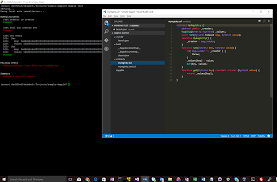
The maxpeers command is set to 0 to disable the network.In the geth console, type the following to make a new account and create a new password by typing in whatever you want.You will have to type your new password twice.The output after this should be a string of letters and numbers — an address of your account.Save this address somewhere and exit by typing “exit” and hitting Enter.You need to reopen the genesis block file.Type the following:In the “alloc” brackets, paste your account address you saved earlier.You should go ahead and give yourself an Ether balance as well.The amount shown next to “balance” below is equal to 10 Ether.Once you are done updating it, save the file with Ctrl+X, Y, Enter.Execute these commands to clear out the old blockchain data and restart geth:In the geth console, type these commands:Your address will appear, as well as your balance of 10 Ether.In order to have a working blockchain, you need to create miners.To do this, exit the geth console by typing “exit” and hitting Enter.To start mining, execute this command:Geth will now start.

You’ve created a miner which, as I mentioned earlier, collects ether fees.Type the below command to check your balance now:You should now have more Ether than you had before.The Ethereum contract you are working with will be written in Solidity.You have to install the Solc compiler in order to use Solidity.To do this, open a new terminal and type the following:A message appears saying “Press ENTER to continue.” Press Enter and then type the following:This will output a path to Solc, which you will need to remember.Return to the Terminal window showing the geth console.Execute these commands, changing
to the path that was returned to you:The response to the second command is [“Solidity”] which tells us that you now have Solc and can use Solidity.Below is the code for a simple contract with added comments, taken and modified from Sams Class.It contains two types of contracts.The first, a mortal contract, specifies a contract that can be killed by the person who wrote it and it needs to be declared as such, as contracts are immortal by default.