bitcoin mining lottery

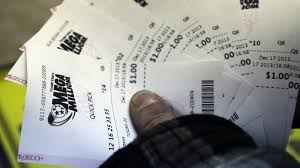
Bitcoin Sign up or log in to customize your list._ Here's how it works: Anybody can ask a question Anybody can answer The best answers are voted up and rise to the top up vote 4 down vote favorite 1 I know mining is extremely difficult now.I just wondering has anyone "won" by solo mining a block?How does the chances compare against say wining the lottery?Assume 3 Giga Hashes Per Second say.solo-mining mining-profitability up vote 6 down vote Unless the lucky winner were to announce his luck, there is no way for anyone to tell the difference.So, even if one cannot find any information suggesting that someone did, it could have happened.Blockchain.info gives the current hashing power as 47,289,554.08 GHash/s, so your chance to mine any one block would be 3/47,289,554.0 = 6.3439e-8.In Germany there is a popular lottery where you have to guess six out of 49 and one out of ten numbers.The chance of getting all seven numbers right is 7.1511e-8.

So, the probability to win the jackpot is currently as likely as solo-mining a block with 3GHash/s.Of course, the lottery has a bunch of smaller prices for getting it partially right, and the jackpot would be worth millions of Euros, not 25 BTC.But then, it is cheaper to play "Bitcoin lottery" and the draws are more frequent.Below an estimate of the chance to get one block out of a day's/year's worth of blocks (disregarding increasing difficulty): Altogether, it seems to me that regular lottery is more profitable, but then "Playing lottery is a tax for people that are bad at math.".up vote 1 down vote Currently network's capacity is about 41000000 Gh/s.In this case your odds is 3/41000000=0.00000007% For example, your odds to receive royal in hold'em flush is about 0.0002% So good luck!up vote 0 down vote Here is a real world jackpot!/index.php?topic=763510.msg13463822#msg13463822 Your Answer Sign up or log in Sign up using Google Sign up using Email and Password Post as a guest Name Email discard By posting your answer, you agree to the privacy policy and terms of service.

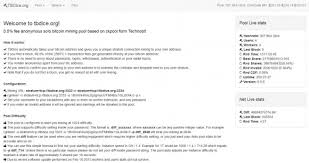
Not the answer you're looking for?Browse other questions tagged solo-mining mining-profitability or ask your own question.Welcome to NiceHash solo mining & blockchain lottery!Try solo mining with your miner or by renting hashing power on NiceHash and cross your fingers to get a full 12.5 Bitcoin, 25 Litecoin, dynamic Dash block reward!# Age # Age # Age NiceHash solo mining & blockchain lottery is an advanced multi-algorithm stratum based solo mining pool for Bitcoin, Litecoin, Dash.You can use it as a regular solo mining pool by connecting your miners to our solo mining stratum servers.Moreover you can also rent hashing power on NiceHash and point it to our solo mining stratum servers and play some blockchain lottery.If you find a block, 99.5% of the block reward + transaction fees get generated directly at your address.Therefore there is no login, no need to worry about passwords, withdrawals, authentication or pool wallet hacks.No funds are kept by pool but are rather directly generated to your address.
You remain anonymous apart from your Bitcoin/Litecoin/Dash address.All you need to confirm is that you are mining to your own address.Please note that if you do not find a block, you get no reward at all with solo mining.Connect your miners or rented hashing power from NiceHash to: :3334 for Bitcoin :3333 for Litecoin :3336 for Dash You should use you Bitcoin/Litecoin/Dash address as worker username and any password.
ethereum hello worldYou can add worker name by adding ".workername" at the tail of your Bitcoin/Litecoin/Dash address; example: If you enter an invalid address you will be rejected (authorization error).
bitcoin motley foolMake sure you use valid/existing address!
litecoin mining rig buyPlease see FAQ for more information and additional options.
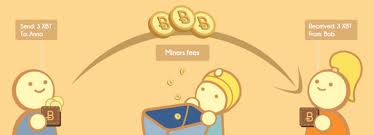
Each time a new block is found a notification will be automatically posted to Twitter @NiceHashSolo; therefore you're welcome to follow us on Twitter @NiceHashSolo.In their new book Bitcoin for the Befuddled, Drs.Conrad Barski and Chris Wilmer use non-technical language and clear, step-by-step approaches to explain the ins and outs of bitcoin.Here, they provide an overview of the "blockchain lottery" and the process of how miners are rewarded.As an incentive for users to update the blockchain as frequently as possible, Bitcoin uses a lottery-based reward system.Many people become miners and try to be the first to add a block to the blockchain.Then, based on some probability, a winner is chosen and gets to add a block.What is the purpose of using a lottery like this to run Bitcoin?Well, let’s imagine Crowley wants to buy a $10,000 car from Clarice.Using traditional currency, two people engaging in this transaction would probably go to a bank and have the money transferred between their bank accounts (or use a cashier’s check, which is analogous to this; see Figure 2-10).
They would do this at a bank because they need a trusted third party (a “banker”) that manages a “money ledger” and moves the money on the ledger from one person’s account to another.The banker’s job is to make an announcement that Crowley and Clarice can trust; that is, to affirm that the ledger has been updated correctly.(The banker may or may not be sporting a monocle, wearing a top hat, and smoking a cigar.)With Bitcoin, we also need a person to adjust a ledger, which in this case means adjusting the blockchain by adding a block to it.It turns out anyone can fill this role, as long as he is not connected with either party in the transaction, because that could lead to a conflict of interest.Picking a person randomly through a lottery helps accomplish this.So with Bitcoin, a lottery picks a random miner, who then announces to the network that certain Bitcoin transactions are valid (see Figure 2-11).Of course, there’s always a small chance this miner does know one of the persons involved in a recent transaction.

This is why blocks are arranged in a chain: In roughly 10 minutes, when the next lottery winner is announced, this winner also confirms, as part of her announcement, that she agrees with all the transactions of the previous lottery winner (see Figure 2-12).In the process, each winner in the Bitcoin-mining lottery receives a reward, which is a certain amount of bitcoins.The reward includes all of the transaction fees for the transactions in that block, which motivates miners to collect as many transactions into a block as possible, increasing their reward.To be eligible for the reward from the next block, which is added 10 minutes later, a miner needs to have the latest copy of the blockchain to participate in the next round.This process is done automatically by open source Bitcoin-mining software that runs on computers controlled by the people involved in mining.Because of this incentive structure, thousands of miners constantly help process the transactions of Bitcoin users, making sure that the blockchain is always up-to-date.
The reward lottery is run by the community; no central authority exists to choose a winner.We’ll skip the technical details for now and just say that miners generate random numbers continuously, until they find a winning one.This takes about ten minutes.The community then verifies (also through cryptography) that the number found by the individual miner is the winner, and the miner adds a new block to the blockchain and collects the reward.When this happens, the phrase commonly used is that a miner has found a block.Bitcoin for the Befuddled by Conrad Barski and Chris Wilmer is available now through No Starch Press.CoinDesk readers can enter 'COINDESK' at the checkout to receive a 40% discount on their purchase.The leader in blockchain news, CoinDesk is an independent media outlet that strives for the highest journalistic standards and abides by a strict set of editorial policies.Have breaking news or a story tip to send to our journalists?Contact us at [email protected]/*