bitcoin foundation singapore

Join our Telegram Channel!Get Bitcoin News stories in Telegram × DismissOn July 24th and 25th Informa Australia hosted their inaugural Bitcoin conference in Sydney, Australia.Entitled ‘Cryptocon Conference and Barcamp’, this two-day event represented the first major Bitcoin event to come to Sydney.Cryptocon drew together many of the key themes in Bitcoin and emerging blockchain based technologies from the US, Europe, Asia and Australia.The event took place at the Park Royal Hotel in Darling Harbour and featured a wide array of global speakers and attendees.Day one was chaired by Tristan Winters, Director of Bitcoin Australia, and featured presentations from Bitcoin entrepreneurs and venture capital investors, covering topics as wide ranging as privacy and the Internet of Things, as well as panels on fostering adoption and the ‘Dark Web’.The discussion in the afternoon was opened up to audience members more proactively.The law enforcement and Reserve Bank members offered their unique perspectives on blockchain technologies and its implications for their own workings.

Speakers on Day one included Domenic Carosa, the Co-Founder and Chairman of Future Capital Bitcoin Fund, Jeremy Glaros, Chief Executive Officer of Coinarch, Niki Scevak, Principal at Blackbird Ventures, Jeremy Lam, Technical Business Analyst at Counterparty & Creator of Vennd, Chris Mountford, Senior Developer at Altassian & Founder of BlockZombie, Adam Poulton, the Secretary of Bitcoin Association of Australia, Amor Sexton, Digital Currency Lawyer at Adroit Lawyers, Leon-Gerard Vandenberg, CTO Future Capital Bitcoin Fund & Founder of bitSIM and Lawrence Chan, Head of Product Development at MyRepublic.
bitcoin value ilsDay two was notable for some truly enlightening presentations by leading academics.
circle bitcoin promotionThese thinkers were proud to release their own research, which focused on topics as broad as the environmental impacts of mining (relative to the creation of fiat and precious metals), developments in cryptography and challenges in blockchain analysis.
litecoin pool mining software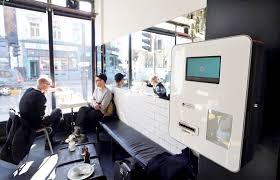
The studies explored key issues around these topics at a depth rarely seen at Bitcoin events.Chaired by Pantelis Roussakis, Co-Founder of Bitcoin Association of Australia, the second day opened with an in-depth and analytical study of Bitcoin and its blockchain by Jonathan Levin, founder at Coinometrics.
litecoin mining efficiencyThis was followed by a highly instructive panel on the ‘Dark Economy’.
bitcoin spot north hollywoodHass McCook of The Lifeboat Foundation and Kitten Tofu, Software Engineer and Crypto-currency Researcher at Eudemonia presented some eye opening academic analysis.
armory bitcoin setupIn the first case, on the comparative environmental impacts of mining.
bitcoin immobilier
In the second instance on the push towards anonymity, developments in cryptography and their incorporation into tools such as Dark Wallet, Coinjoin, Stealth Addresses and Monero.
comprar bitcoin tarjeta de creditoAnson Zeall, CEO & Co-Founder of CoinPip and Jason Williams, Founder of BitPos both looked at the retail implications of Bitcoin from the perspective of their own companies, while Tristan Winters presented an insightful look at the nitty-gritty of Bitcoin business in Africa, relative to the hype.
ethereal mac addressMatthew Cridland’s (Tax Partner at DLA Piper, Australia) candid and practical look at Bitcoin and its tax implications was a welcome addition for many attendees.Advances in Bitcoin and its underlying blockchain technology are seeing an explosion in trustless networks.This was reflected well at the event, from open to close.
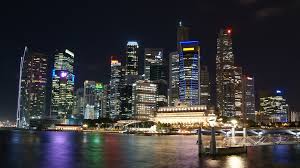
Informa would like to extend their gratitude to all sponsors, attendees and especially the speakers who made this event possible.If you missed out on this topical and interactive event in Sydney, do join Informa’s Cryptocon Conference and Barcamp in Singapore.It will take place on the 24th and 25th November at Singapore’s Rendezvous Hotel.Local entrepreneur Ki Chong Tran believes he has the solution to many of Cambodia’s problems.Look no further, Tran says, than bitcoin.Should the 26-year-old mixed martial arts trainer and 3D-printing business owner get his way, the widely used but controversial digital currency will arrive in Cambodia within the coming weeks, and the capital will be home to two bitcoin ATMs.On March 1, Tran submitted what he described as a “long-held weight off his chest” – a six-page proposal to the New York-based Bitcoin Foundation outlining all the ways the virtual currency could help his country.“I’ve been wanting to do this for a long time,” Tran, who has his own stock of bitcoins, said.
The proposal, the first documented effort to introduce bitcoin to the local market, hopes to land one of the foundation’s annual grants, which rewards applicants with funding in the form of bitcoin.He’s asking for $100,000 worth.Using the examples of garment-sector demonstrations in January, when military police shot dead at least four workers, opposition protests in July over national election results, and Cambodia’s repeat appearance on polls showing it as one of the world’s most corrupt countries, the proposal argues that the timing is right for Cambodians to embrace the world of digital currency and e-commerce services such as PayPal.Bitcoin is the world’s most commonly used digital currency, with about 11 million currently in circulation, according to the latest estimates.One bitcoin is currently worth about $638.Individuals can purchase the so-called crypto-currency online through a bitcoin exchange, by feeding cash into a bitcoin ATM, or by setting up an open-source software account and trading money for bitcoin with another person.

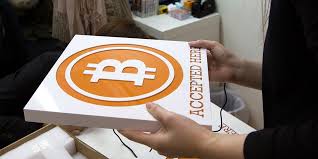
As a result, bitcoin trades successfully bypass the need for a third party, such as a bank, and subsequently eliminate hefty banking fees, transaction times and interest on purchases.Bitcoin transactions, meanwhile, attract fees of less than 40 cents.In other parts of the world, namely Japan, Britain and the US, cafe owners and retail outlets are increasingly offering bitcoin as a legitimate form of point-of-sale payment.Bitcoin users can buy something as simple as a cafe latte by scanning a vendor’s QR code, which is then read by a mobile device that is actively connected to the consumer’s bitcoin wallet, or account.A publicly visible bitcoin ledger allows all users with the appropriate software installed on their computers to track the sender and receiver of any bitcoin transaction.For individuals, this does not necessarily mean transparency, since users can adopt clandestine names and remain anonymous.Businesses, however, if accepting the digital currency as a formal means of payment, would need to attribute their bitcoin account to the business name or to a connecting bank account, making all business-related transactions almost entirely traceable.

This feature, according to Tran, could be the key to exposing Cambodia’s corruption and bribery woes.“Cambodia stands as the 15th most corrupt nation in the world,” the proposal states, citing Transparency International’s 2013 Corruption Perceptions Index, which was published in December last year.“Bitcoin’s public ledger, which is visible to everyone and allows you to trace a coin from its creation, through all its transfers of ownership, to its final destination, almost makes it impossible for businesses to take bribes or engage in corrupt activities,” Tran stated.The Cambodian Federation of Employers and Business Associations this week reported that 58 per cent of Cambodian businesses interviewed in a survey never refused paying a bribe.In the proposal, Tran did not address how bitcoin could stop businesses from continuing to use bribes simply by using cash in addition to bitcoin.Tran wrote that there were also many other benefits.“There is no need for a central authority, an overarching regulator, a bank or anything, because each bitcoin is unique, cannot be duplicated and if it is transferred anywhere, it can be seen by everyone,” Tran said.

“Yes, e-commerce, or online money transfer methods like PayPal, which is not currently accepted here in Cambodia, are not widely understood yet.[But] I think with Cambodia’s young population, about 50 per cent of people are aged under 25 years, bitcoin definitely has a market here.” Tran admits that there are risks associated with the new form of currency, especially in the wake of Mt.Gox, the Japan-based bitcoin exchange that filed for bankruptcy last month after hackers allegedly stole about 750,000 bitcoins ($480 million).“This is all brand new.It’s kind of like a Wild West situation where there is a lot of money to be made and as a result lots of criminals and scammers are out to get it.There are still people stealing cash, aren’t there?” he said.On February 23, soon after the hacking and prior to filing for bankruptcy, Mt.Gox vacated its three elected board seats at the Bitcoin Foundation.Soon, the world woke up to headlines about bitcoin.On February 26, police in Singapore found the body of Autumn Radtke, the founder of bitcoin exchange First Meta, Police are reportedly treating it as a suicide.

Earlier this month, US magazine Newsweek published a widely challenged article claiming to have tracked down bitcoin founder Satoshi Nakamoto.The bitcoin concept was first created in 2009 by a single, or number of developers using the name Satoshi Nakamoto to launch the first account.The proposal from Cambodia hasn’t generated any attention just yet, however it might soon with its distinctly local twist.Tran is requesting $100,000 in bitcoin to set up infrastructure in Phnom Penh for users, but also to promote the digital currency through mixed martial arts (MMA) and Khmer kickboxing competitions.He breaks the cost down as follows: $10,000 of bitcoin will go toward sponsoring six local MMA and kickboxing fighters; $5,000 would go toward setting up an informative website; $15,000 would go toward the purchase, shipping and maintenance of two Lamansu brand bitcoin ATMs; and $60,000 would go toward paying the salaries of two staff hired to maintain the infrastructure.Chan Reach is the founder and head trainer at Afighter Gym in Chamkarmon district, where Tran, also a co-owner in the gym, hopes to launch his bitcoin venture.

Reach isn’t a bitcoin convert like Tran, but he senses an opportunity amid otherwise tough times.“We have no income whatsoever and we use whatever money we can gather up to feed our fighters and pay the rent,” he said in an email yesterday.“I don’t really know much about bitcoin and it took me a while to understand it.But after Tran explained it to me I think it’s great!I would use it definitely.If there was more information publicly available, I’m sure more Cambodians would use it as well.” However, not all are as enthusiastic and Tran and his kickboxing co-investor.In Channy, CEO of Cambodia’s biggest bank, Acleda, said that he isn’t familiar with bitcoin.Grant Knuckey, CEO of ANZ Royal Bank, said bitcoin hasn’t been discussed among Cambodia’s biggest financial institutions, and he doesn’t see a market here given the nascent state of electronic payments.“Globally, it’s far too early to say.I wouldn’t dismiss it out of hand, and in fact I’d go as far as to say that perhaps bitcoin is laying bare the illusion of fiat currencies and making people think about the question ‘what is money?’,” Knuckey said.

Fiat currencies are issued “by decree” and are backed by governments.“I’m not overly excited at this point, but it is interesting to observe for now,” Knuckey said.National Bank of Cambodia director general Chea Serey did not return phone calls seeking comment.Central banks in other countries, though, have come out against the virtual currency.China, Russia, Vietnam and Indonesia have banned bitcoin, while Singapore is regulating it, according to reports.Many governments don’t recognise bitcoin as a currency.Adam Wyatt, chief operating officer and lead analyst at Colorado-based financial research firm Digital Currency Research Llc, said everyday use of bitcoin remains relatively low, even in the US, with uptake from vendors of point-of-sale services still at a snails-pace.“Point-of-sale solutions are needed and many exciting companies are being built right now to address these needs,” he said.Wyatt said setting up a bitcoin account in Cambodia would be easy, with only a little overhead, such as an internet connection.